

• Breytingar á styrk málmjóna
• Breytingar á kalkhörku
Þessi efni hverfa ekki einfaldlega með því að bæta við klór.
Með tímanum verður vatnið eins og súpupottur þar sem hráefni eru stöðugt bætt við en aldrei breytt. Jafnvel með stöðugri upphitun og sótthreinsun mun heildargæði þess versna. Þess vegna eru vatnsskipti í raun að endurstilla kerfið.
Það getur:
• Minnka mengunarefnaþéttni
• Endurheimta efnajafnvægi
• Fjarlægið uppsafnað óhreinindi
• Minnka bakteríuáhættu
Þetta eru áhrif sem engin efnafræðileg efni geta alveg komið í staðinn fyrir.Hversu oft ætti að skipta um vatn í heitum potti?Strangt til tekið er ekkert eitt svar sem á við alla notendur.
Tíðni vatnsskipta er almennt háð eftirfarandi þáttum:
• Vatnsmagn
• Fjöldi notenda
• Tíðni notkunar
• Stilling vatnshita
• Síunarhagkvæmni
Iðnaðurinn mælir almennt með því að skipta um vatn á 3 til 4 mánaða fresti fyrir heimili.
Stytta skal bilið á viðeigandi hátt í eftirfarandi tilvikum:
• Mikil notkun á heimilum
• Samnýting margra einstaklinga
• Rekstrarumhverfi fyrir fyrirtæki
• Langtíma notkun við hátt hitastig
Fyrir heita potta með nuddpotti í atvinnuskyni þarf stundum að skipta um vatn enn oftar. Það er mikilvægara að viðhalda stöðugu og heilbrigðu vatnsgæðum en að skipta um vatn eins oft og mögulegt er.
Hvernig er hægt að draga úr hættu á bakteríuvöxt?
Auk reglulegra vatnsskipta ætti að koma á fót alhliða viðhaldskerfi.
Í fyrsta lagi, prófaðu reglulega:
• pH gildi
• Heildarbasískleiki
• Sótthreinsandi styrkur

Í öðru lagi, haltu síunarkerfinu hreinu.
Iðnaðurinn mælir með því að þrífa síuhylkið á 2 til 4 vikna fresti og skipta um það reglulega eftir notkun. Að auki ætti að framkvæma reglulega rafstuðmeðferð til að hjálpa til við að oxa lífræn mengunarefni. Ennfremur getur það að tileinka sér þann vana að fara í sturtu áður en farið er í nuddpottinn dregið verulega úr mengunarefnum.
Þessar aðgerðir vinna saman að því að lágmarka hættu á bakteríuvexti.
Hvernig hjálpar vel hannaður heitur pottur til við að bæta vatnsgæði?
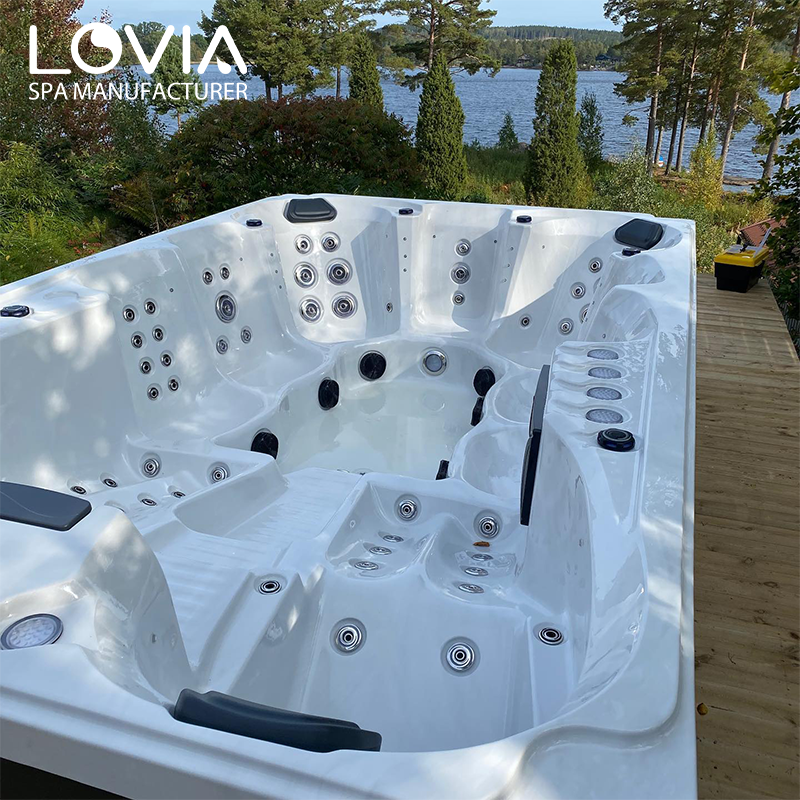
Auk reglubundins viðhalds hefur hönnun búnaðarins sjálfs einnig áhrif á bakteríustjórnun. Á undanförnum árum hefur iðnaðurinn í auknum mæli einbeitt sér að því að hámarka blóðrásarkerfi, síunarkerfi og pípulagnir.
hágæða heitir pottar
, skilvirkari blóðrás dregur úr stöðnuðum vatnssvæðum, eykur sótthreinsunarþekju og hjálpar síunarkerfinu að fanga mengunarefni hraðar.
Sem vörumerki með langa sögu í heilsulindariðnaðinum leggur LOVIA® alltaf áherslu á upplifun notandans eftir viðhald við vöruhönnun. Auk þægilegrar nuddupplifunar og stöðugrar frammistöðu eru skilvirkni vatnsrásar, síunarframmistaða og hönnun vatnsrása einnig lykilatriði í rannsóknum og þróun.
Algengar spurningar
Vatnið í heita pottinum lítur út fyrir að vera tært; þarf ég samt að skipta um vatn?
Já. Tært vatn þýðir ekki endilega að það séu engar bakteríur eða mengunarefni. Mörg lífræn efnasambönd, uppleyst efni og örverur er ekki hægt að greina með berum augum, þannig að það er samt nauðsynlegt að skipta um vatn samkvæmt ráðlögðum tíma.
Hversu oft ætti að skipta um vatn í nuddpotti með nuddpotti?
Til heimilisnota er almennt mælt með því að skipta um vatn á 3 til 4 mánaða fresti. Ef baðkarið er notað oft eða af mörgum, ætti að stytta vatnsskiptatímann í samræmi við það.
Hvaða vandamál eru líklegast til að koma upp ef vatnið í heitum potti er ekki skipt út í langan tíma?
Algeng vandamál eru meðal annars bakteríuvöxtur, myndun líffilmu, aukin lykt, óhófleg klórneysla, skýjað vatn og húðerting.
Hvað er útbrot í heitum potti?
Útbrot í heitum pottum tengjast oftast bakteríusýkingu og birtast sem roði, kláði eða litlir rauðir blettir í kringum hársekkina. Rétt viðhald og regluleg vatnsskipti hjálpa til við að draga úr áhættunni.
Getur síunarkerfi heita pottsins komið í stað vatnsskipta?
Nei. Síunarkerfið fjarlægir aðallega svifagnir, en mörg uppleyst mengunarefni og efnaaukaafurðir halda áfram að safnast fyrir, þannig að vatnsskipti eru enn nauðsynleg í heitum pottum með nuddpotti.
First, skin irritation.
Some bacteria and metabolic products may cause:
• Skin redness
• Itching
• Folliculitis
The most common problem is the so-called "hot tub rash".
Second, eye and respiratory irritation.
When disinfectants react with organic matter to form byproducts, it may cause:
• Eye stinging
• Nasal discomfort
• Respiratory irritation
These effects are usually more pronounced in sensitive individuals and children. Furthermore, people with weakened immune systems may face a higher risk of infection.
While a properly maintained whirlpool spa hot tub carries a lower overall risk, neglecting to change the water for extended periods undoubtedly increases potential problems. Therefore, the industry generally recommends that users consider water changes as part of health management, not just routine equipment maintenance.
Why can't adding disinfectant replace water changes?
This is a question many users are most concerned about. Theoretically, if chlorine is continuously added, why is a water change still necessary? The answer is: disinfectants can only kill some microorganisms, not eliminate all contaminants.
For example:
• Continuously increasing Total Dissolved Solids (TDS)
• Gradually accumulating urea
• Continuously increasing cosmetic residues
• Changes in metal ion concentration
• Shifts in calcium hardness
These substances will not disappear simply by adding chlorine.
Over time, the water becomes like a pot of soup with constantly added ingredients but never changed. Even with continuous heating and disinfection, its overall quality will deteriorate. Therefore, water changes are essentially "resetting the system."
It can:
• Reduce contaminant concentration
• Restore chemical balance
• Remove accumulated impurities
• Reduce bacterial risk
These are effects that no chemical agent can completely replace.
How often should you change the water in a spa hot tub?
Strictly speaking, there is no single answer that applies to all users.
The frequency of water changes is generally influenced by the following factors:
• Water volume
• Number of users
• Frequency of use
• Water temperature setting
• Filtration efficiency
The industry generally recommends changing the water every 3 to 4 months for residential users.
The interval should be shortened appropriately in the following situations:
• High-frequency household use
• Shared use by multiple people
• Commercial operating environment
• Long-term operation at high temperatures
For commercial whirlpool spa hot tubs, even more frequent water changes are sometimes necessary. Maintaining a stable and healthy water quality environment is more important than pursuing the longest possible water change interval.
How to reduce the risk of bacterial growth?
In addition to regular water changes, a comprehensive maintenance system should be established.
First, consistently test:
• pH value
• Total alkalinity
• Disinfectant concentration
Second, keep the filtration system clean.
The industry recommends cleaning the filter cartridge every 2 to 4 weeks and replacing it periodically depending on usage. In addition, regular shock treatments should be performed to help oxidize organic contaminants. Furthermore, developing a habit of showering before entering the whirlpool spa hot tub can significantly reduce contaminant input.
These measures work together to minimize the risk of bacterial growth.
How does a well-designed spa hot tub help improve water quality management?
Besides routine maintenance, the design of the equipment itself also affects bacterial control. In recent years, the industry has increasingly focused on optimizing circulation systems, filtration systems, and piping structures. For high-quality spa hot tubs, more efficient circulation reduces stagnant water areas, increases disinfectant coverage, and helps the filtration system capture contaminants more quickly.
As a brand with a long history in the spa industry, LOVIA® always focuses on the user's post-maintenance experience during product design. In addition to a comfortable massage experience and stable performance, circulation efficiency, filtration performance, and water circuit design are also key research and development priorities.
FAQ
The water in the spa hot tub looks clear; do I still need to change the water?
Yes. Clear water does not necessarily mean the absence of bacteria or contaminants. Many organic compounds, total dissolved solids, and microorganisms cannot be detected by the naked eye, so it is still necessary to change the water according to the recommended schedule.
How often should you change the water in a whirlpool spa hot tub?
For home use, it is generally recommended to change the water every 3 to 4 months. If the tub is used frequently or by multiple people, the water change interval should be shortened accordingly.
What problems are most likely to occur if the water in a spa hot tub is not changed for a long time?
Common problems include bacterial growth, biofilm formation, increased odor, excessive chlorine consumption, cloudy water, and skin irritation.
What is hot tub rash?
Hot tub rash is usually related to bacterial contamination and manifests as redness, itching, or small red spots around hair follicles. Proper maintenance and regular water changes help reduce the risk.
Can the spa hot tub filtration system replace water changes?
No. The filtration system mainly removes suspended particles, but many dissolved contaminants and chemical byproducts continue to accumulate, so water changes are still necessary for whirlpool spa hot tubs.
